
Find the right evidence
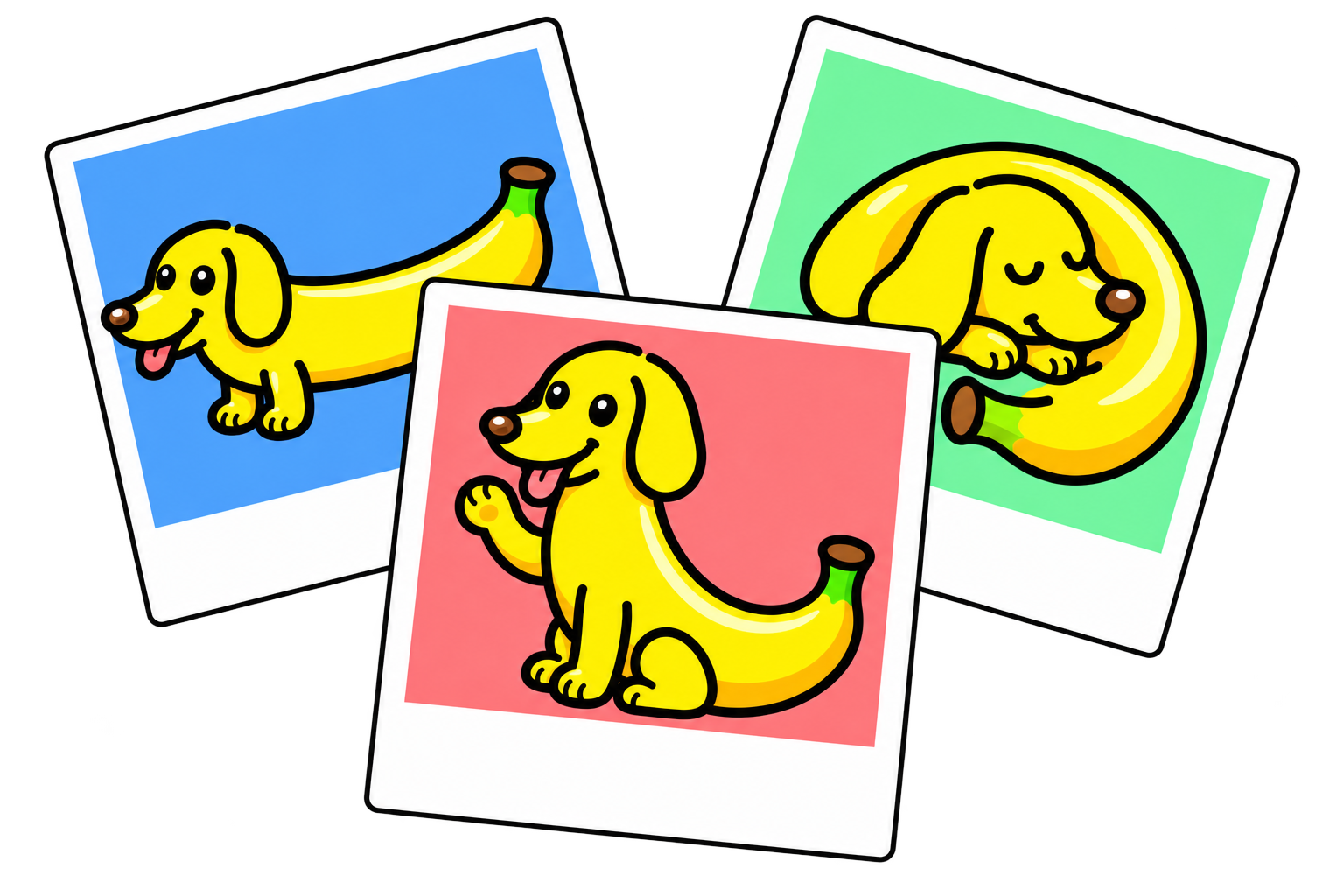
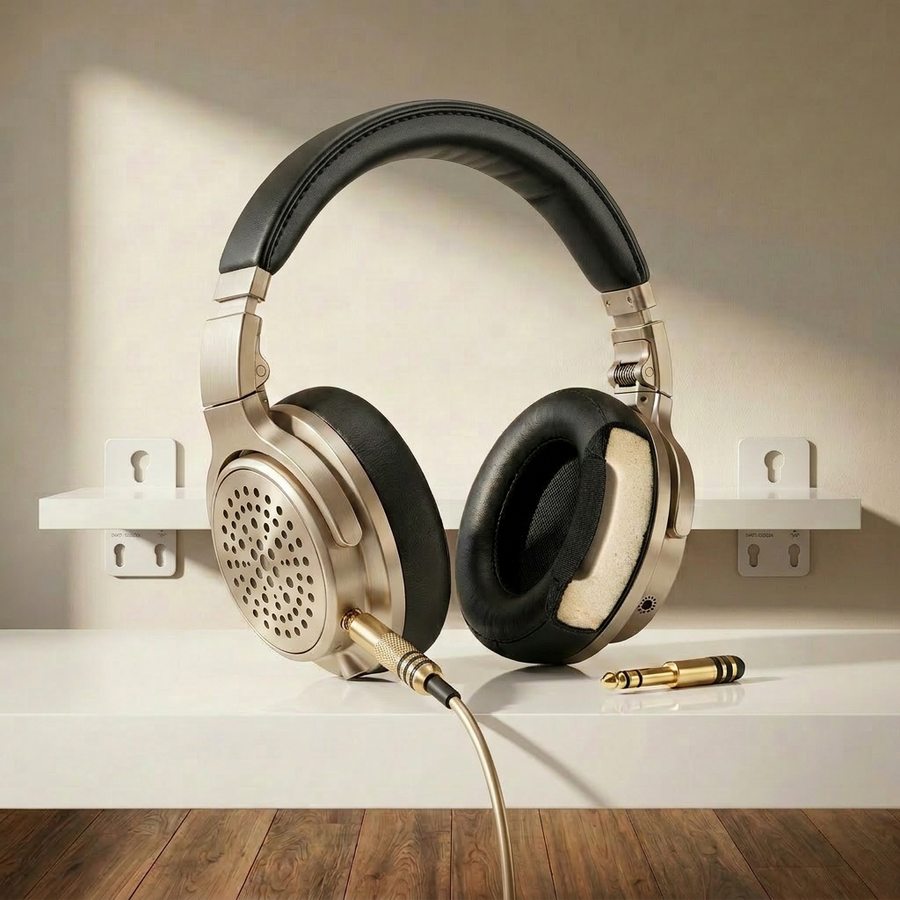
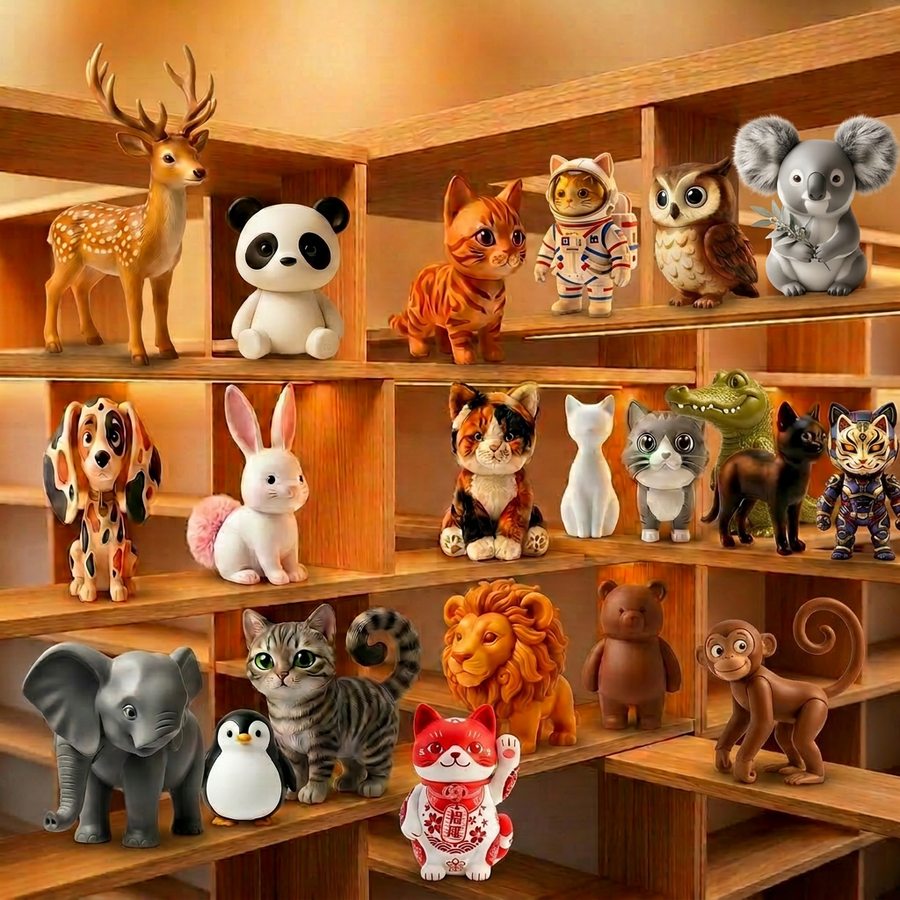
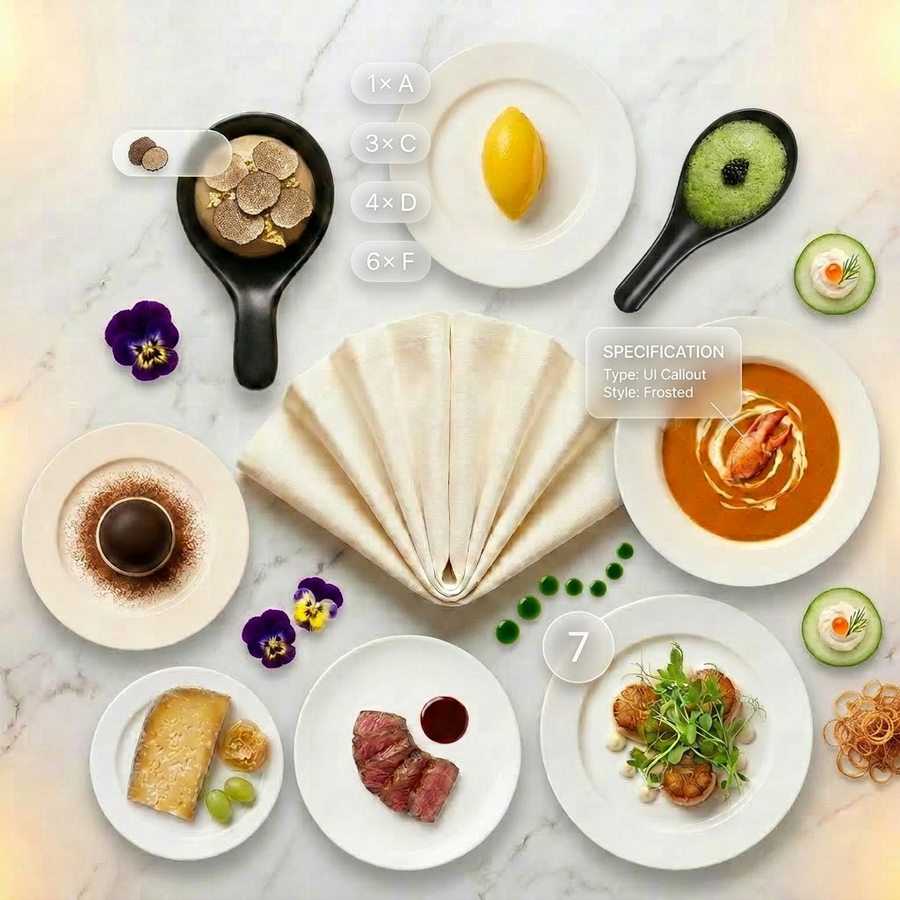
Inspect a large, heterogeneous reference set. Select relevant objects and reject visually convincing distractors.
Reference-grounded contentLong-context. Multi-reference. Expert-verified.
 LongBanana
Many references. One image.
Every detail matters.
An expert-verified benchmark for long-context multi-reference image synthesis. Can a system find the right visual evidence, bind it to the right objects, and satisfy a complex instruction in one coherent image?
Paper coming soon · Browse all 90 benchmark cases
Simulated targets from real benchmark cases. Select a case to inspect its references.
What does LongBanana measure?
A convincing image can still use the wrong reference.
LongBanana checks whether the evidence and the instruction actually agree.
Inspect a large, heterogeneous reference set. Select relevant objects and reject visually convincing distractors.
Reference-grounded contentKeep identity, appearance, and state attached to the correct entity. Respect the relationships between objects.
Entities & relationshipsSatisfy counts, spatial arrangements, and global constraints while synthesizing one coherent final image.
Scene-wide correctnessThe people behind the benchmark
Research communities across academia and industry.
One benchmark. Three suites.
Each suite contains three capability categories, with ten cases per category. Explore the category most relevant to your system.
What is in the scene, how it connects, and where it goes.
SCCSemantic Coverage & ConsistencyRGCRelational Graph ConsistencyLACLayout Arrangement ConsistencyKeep visual identity and appearance faithful to the references.
GACGlobal Appearance ConditioningLABLocal Appearance BindingAHCAppearance Harmonization & CoherenceChoose, infer, and count across a long visual context.
SELSelection & RetrievalTSRTemporal / State ReasoningAGGCounting & Aggregation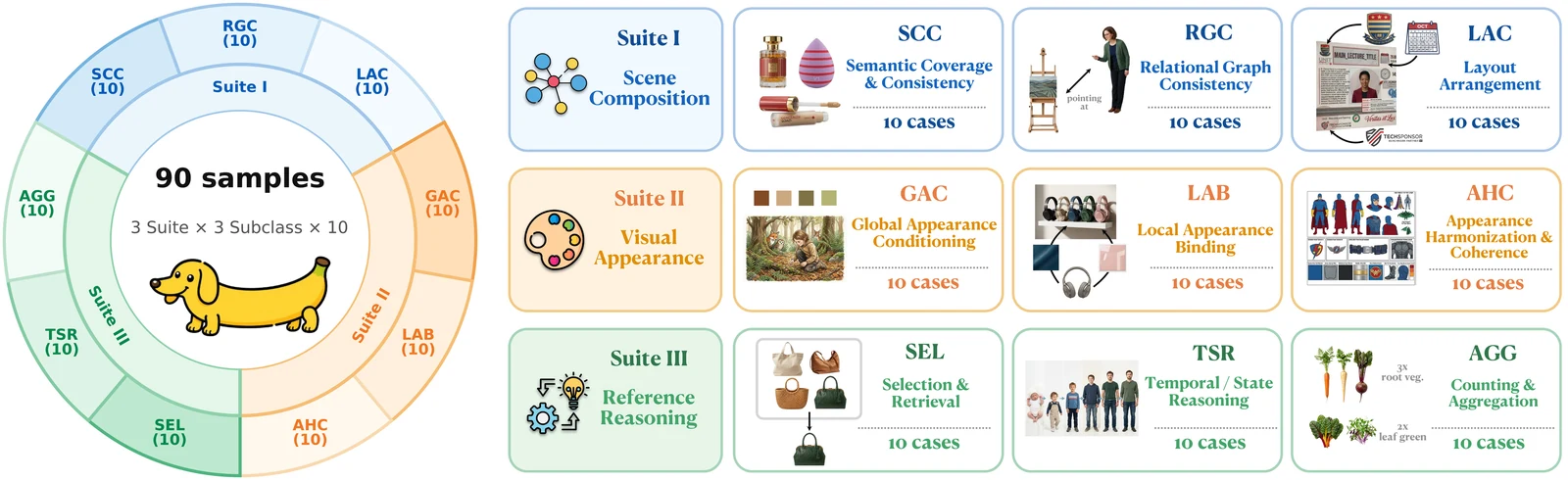
From visual evidence to auditable scores
Graph-grounded evaluation makes errors inspectable across content,
relationships, and scene-wide constraints.
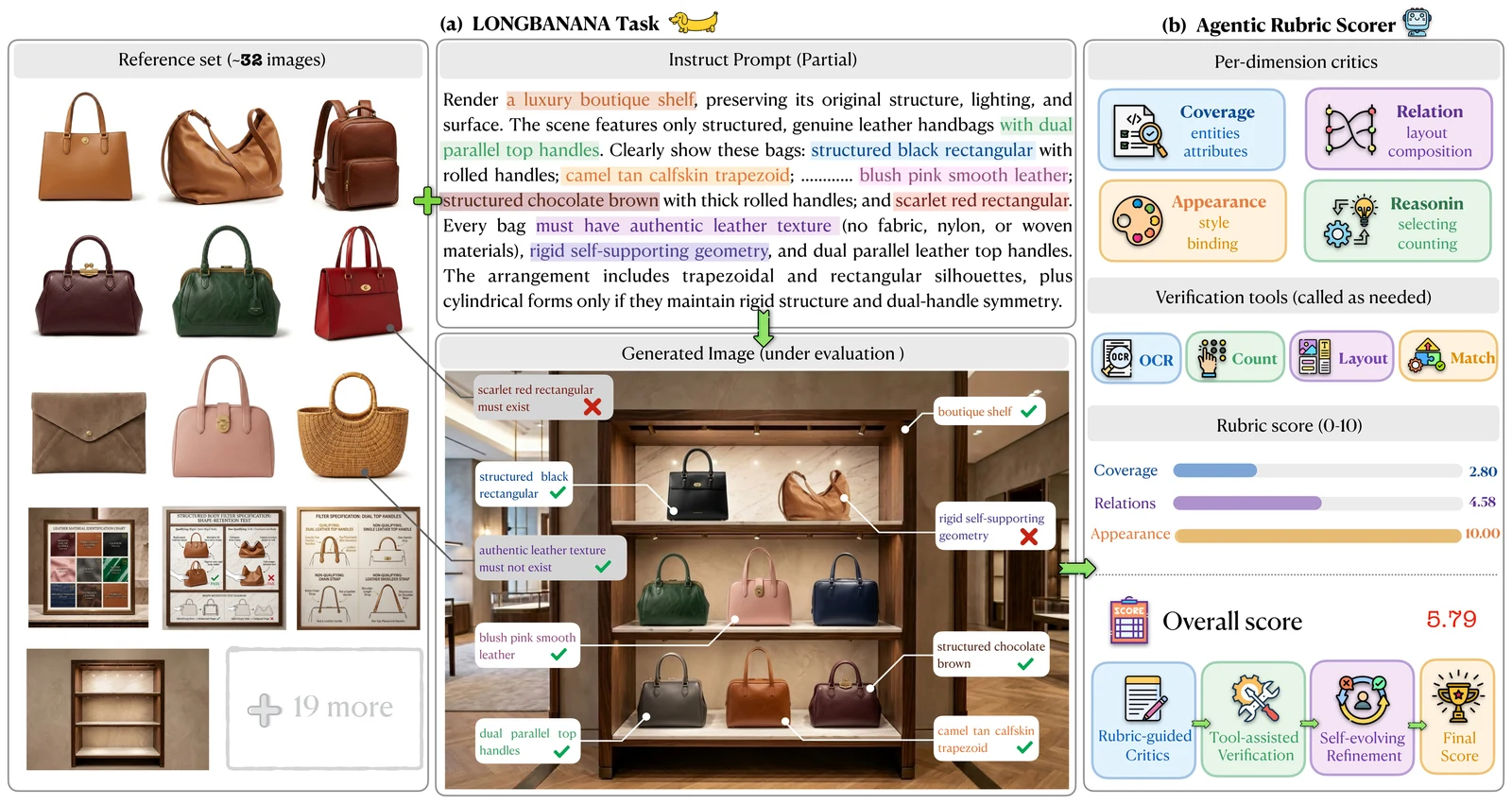
Are the required entities present, with the right identity and appearance?
Are attributes and relationships bound to the correct entities?
Does the image satisfy counts, layout, and global composition?
0 Fail · 1 Uncertain · 2 Pass / Correct omission receives 2 when absence is required.
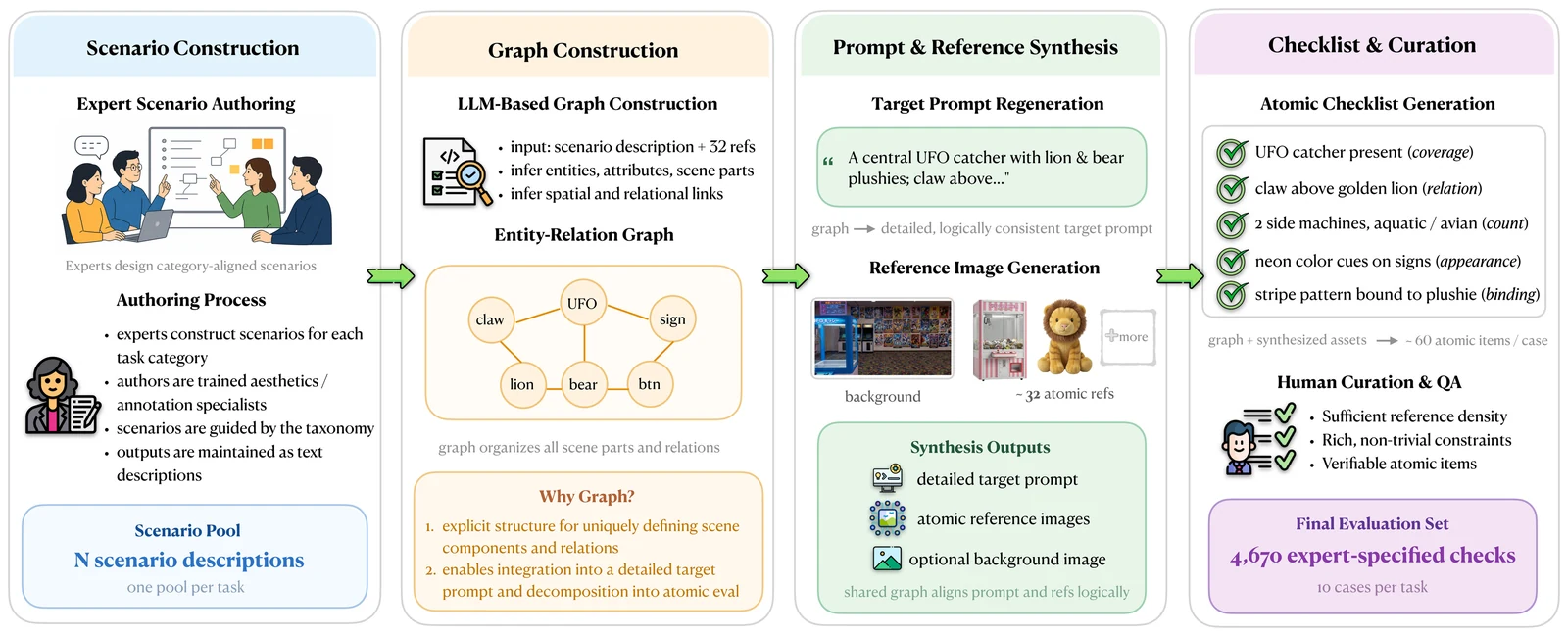
Experts start from realistic scenarios and construct an entity–relation graph. The same graph aligns reference inventories, synthesis instructions, and atomic evaluation criteria. At least 30 cases include two or more hard-negative references; development and quality-check cases are excluded from the reported 90-case benchmark.
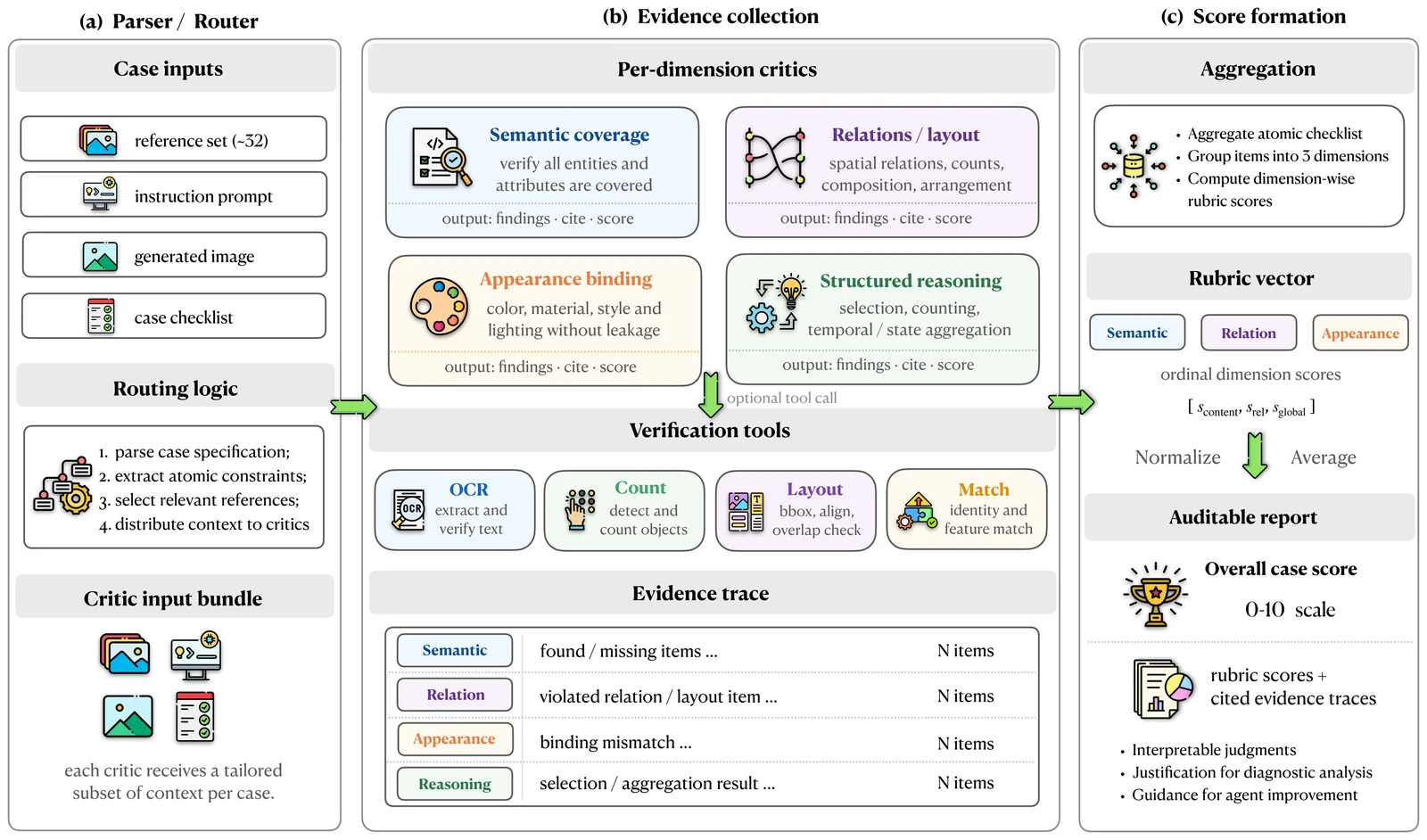
Each checklist item combines the candidate image, relevant references, allowed ordinal labels, and the graph unit being judged. Three critics assess content, relationships, and global constraints, with optional OCR, counting, layout, and identity tools. Every judgment records an evidence trace before aggregation.
The benchmark in practice
Compare controllers and image generators on the same 90-case benchmark. Values follow the manuscript's main tables.
Avg. = checklist-average score (0–100). P@70% = difficulty-weighted task pass rate. Click a column heading to sort. Bold marks the best value in each numeric column.
OpenClaw + RPR with Nano Banana 2.
Shared by OpenClaw + RPR and OpenCode.
RPR improves checklist averages across the reported harnesses, but task pass rates decrease for OpenCode and Hermes-Agent. Better reasoning must preserve the correct reference bindings.
The human-audited pool covers 90 cases and 10 generation conditions: 900 outputs and 46,700 reviewed checklist labels. Subclass and overall scores use checklist averages; suite averages are the mean of their three subclass scores. The independently double-labeled subset has 89.4% exact agreement and 0.83 quadratic weighted kappa.
LongBanana-Gen
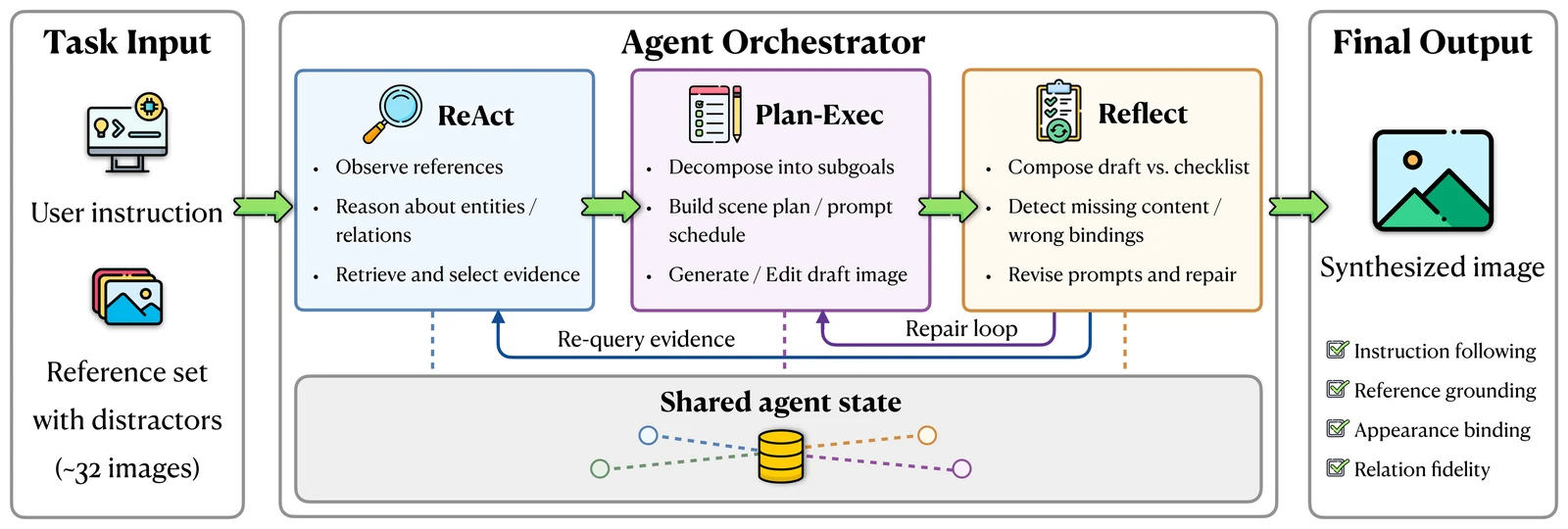
RPR combines ReAct, Plan–Exec, and Reflect to inspect evidence, organize generation, and repair reference-grounded errors.
See the benchmark for yourself
Explore 90 cases, their instructions, simulated targets,
and the complete 32-image reference context.